
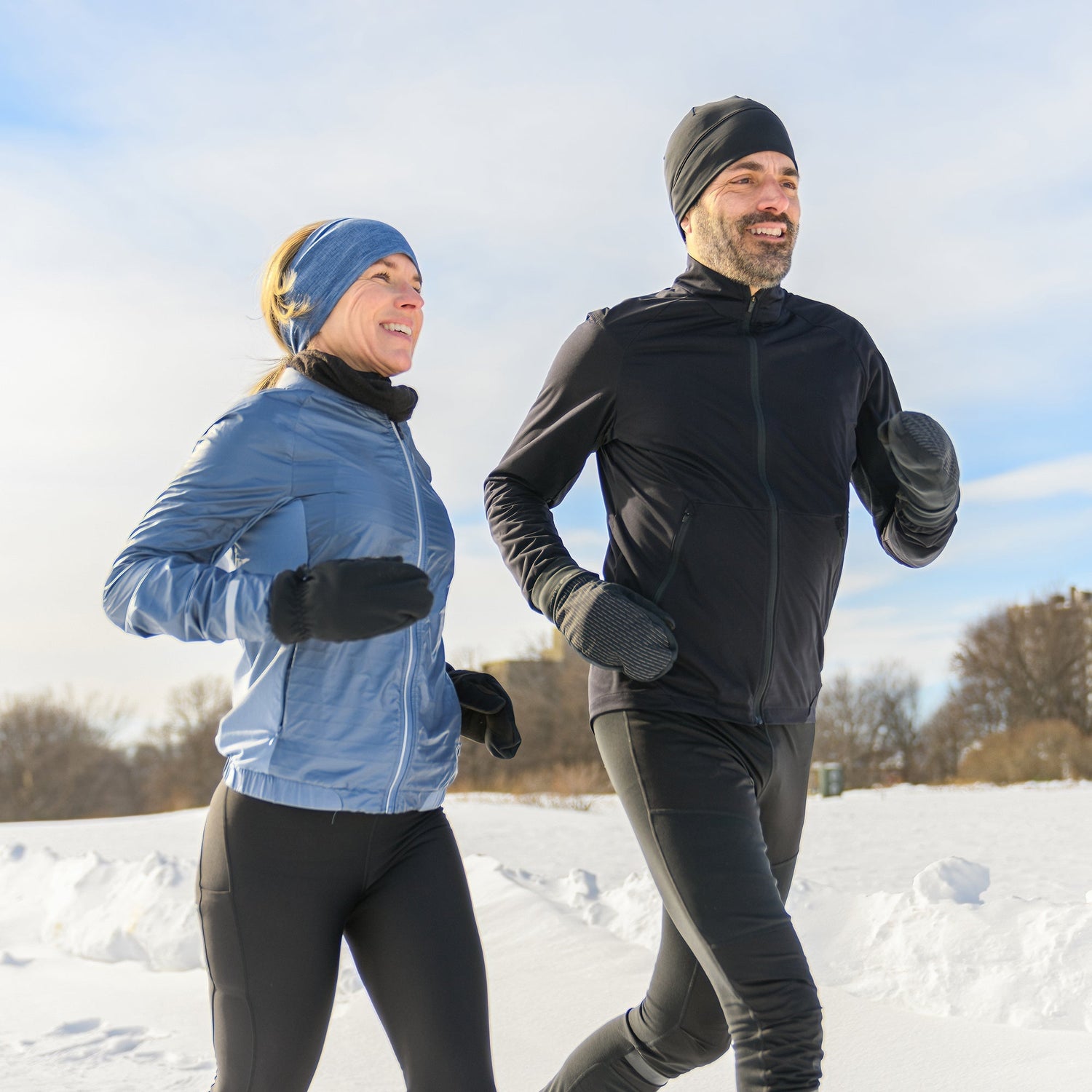
Winter Running Tips and How TENS Can Help You Recover Faster
The Short Answer: Cold muscles have less elasticity and blood flow than warm ones. That means higher injury risk on every winter run — especially in the hamstrings, calves, and hip flexors. A proper warm-up before and a 20–30 minute TENS session after cuts post-run soreness significantly. Most runners feel the difference the next morning.
Why Winter Running Hits Harder Than You Expect
Your Muscles Are Already Fighting the Cold
When temperatures drop, your body pulls blood flow toward your core to maintain temperature. Your working muscles get less circulation. Less circulation means less elasticity. Less elasticity means a hamstring that would normally handle a hard tempo run snaps under the same load.
According to the Healthline cold-weather running guide, warming up thoroughly before cold-weather runs is essential — not optional — to reduce injury risk. Five minutes of indoor dynamic movement before you step outside makes a measurable difference.
Ice and Snow Change Your Gait
You shorten your stride on slippery surfaces. You tense your ankles and hips to stabilize. You land differently than you do on clear pavement. All of that adds up to stress on joints and muscles that don't normally take that load — ankles, knees, and hip flexors especially.
Winter Running Safety Checklist
| Area | What to Do | Why It Matters |
|---|---|---|
| Warm-up | 5–10 min dynamic movement indoors before going outside | Cold muscles strain faster — warm them before cold air hits |
| Layers | Moisture-wicking base, insulating mid, windproof outer. No cotton. | Wet cotton against skin accelerates heat loss |
| Footwear | Trail shoes or traction devices (Yaktrax) for ice | Prevents gait-altering slips that stress knees and ankles |
| Visibility | Reflective gear and headlamp if running in low light | Daylight hours are short in winter — be seen |
| Hydration | Drink before and after even if you don't feel thirsty | Cold dry air pulls moisture out through breathing |
| Post-run | Change out of wet clothes immediately, warm up indoors | Wet clothing drops core temperature fast after you stop moving |
Post-Run TENS Recovery by Muscle Group
After a winter run, your muscles are cold, tight, and carrying more tension than a summer run leaves behind. TENS interrupts the pain signals before they build into next-day stiffness.
The Mayo Clinic notes TENS is effective for muscle pain and tension — both common after cold-weather exercise. Wait until your skin has warmed up and sensation has returned before applying pads.
The Kongzee 4-in-1 DIY TENS and EMS Unit for Winter Runners
Calves tight. Hamstrings sore. Lower back locked from running posture in the cold. Three problems, one device, two channels running simultaneously.
The Kongzee 4-in-1 DIY TENS & EMS Unit lets you run pads on two areas at once — calves and lower back, hamstrings and hip flexors — with independent intensity on each channel. The DIY mode lets you adjust pulse width and frequency to match what your muscles actually need after a cold run, not what a preset program guesses.
According to the WebMD TENS overview, TENS can be used multiple times per day — practical for runners who train daily and need consistent recovery support through a full winter training block.
(Prices may vary due to promotions. Please check the official website for the latest pricing.)
Frequently Asked Questions
How long should I wait after a run before using TENS?
No waiting required. Use TENS immediately after your run once you've cooled down and changed out of wet clothing. Make sure skin is dry and has warmed up before applying pads — numb skin makes it hard to gauge intensity accurately.
Can TENS prevent muscle soreness before a run?
No. TENS is a recovery tool, not a prevention tool. It's most effective post-exercise for reducing existing soreness. A proper warm-up is more effective for injury prevention before you head out the door.
Is TENS safe to use on cold numb skin after a winter run?
Absolutely not — wait until sensation returns. Using TENS on numb skin makes it impossible to gauge intensity accurately, which increases the risk of setting it too high without realizing it.
Can I use TENS on my knees after a winter run?
Yes — but place pads on the muscles surrounding the knee, not directly on the joint. Quadriceps above the knee, hamstrings and calves below. Never place pads over the kneecap itself.




Leave a comment
All comments are moderated before being published.
This site is protected by hCaptcha and the hCaptcha Privacy Policy and Terms of Service apply.