

Short answer: TENS and EMS both deliver electrical pulses through skin electrodes, but they target different goals. TENS primarily stimulates sensory nerves and is commonly used as an adjunct for temporary pain management. EMS or NMES stimulates motor nerves so the targeted muscle contracts. Neither is appropriate for every person, condition or placement.
TENS vs EMS Unit Comparison at a Glance
| Feature | TENS | EMS / NMES |
|---|---|---|
| Full name | Transcutaneous electrical nerve stimulation | Electrical or neuromuscular electrical stimulation |
| Primary target | Sensory nerves involved in pain signaling | Motor nerves and skeletal muscle |
| Typical sensation | Tingling or buzzing | Rhythmic muscle contraction |
| Visible movement | Usually none | Expected in the targeted muscle |
| Common goal | Temporary pain management as part of a broader plan | Muscle activation or clinician-directed rehabilitation |
| Key limitation | Does not diagnose or correct the cause of pain | Does not replace voluntary exercise or professional rehabilitation |
What Is TENS?
A TENS unit delivers low-voltage electrical current through electrodes placed on the skin. The NHS describes TENS as a treatment that can provide temporary relief for some types of pain, although it does not work for everyone. The sensation should be strong but comfortable rather than painful.
TENS does not identify the cause of pain and should not delay assessment of severe, unexplained, worsening or persistent symptoms.
What Is EMS or NMES?
EMS is a consumer term often used for electrical stimulation intended to produce muscle contractions. In rehabilitation literature, the more specific term is neuromuscular electrical stimulation, or NMES. Electrical current activates motor nerves and causes the targeted muscle to contract. Clinical uses and settings depend on the person, muscle and rehabilitation goal.
Cleveland Clinic's functional electrical stimulation overview explains that motor-nerve stimulation can activate muscles and support movement in selected rehabilitation settings. Home EMS should not be presented as a cure, a substitute for exercise or a replacement for clinician-directed rehabilitation.

Which Mode Matches Which Goal?
| Goal | Mode to Discuss | Important Qualification |
|---|---|---|
| Temporary sensory stimulation for pain management | TENS | Effect varies; unexplained pain needs assessment |
| Visible contraction of a specific muscle | EMS / NMES | Correct placement and settings are essential |
| Post-surgical rehabilitation | Clinician-directed EMS / NMES or TENS | Use only within the surgeon or therapist's plan |
| General relaxation or massage sensation | Device-specific massage program | Do not confuse comfort programs with medical treatment |

What Is EMS on a TENS Unit?
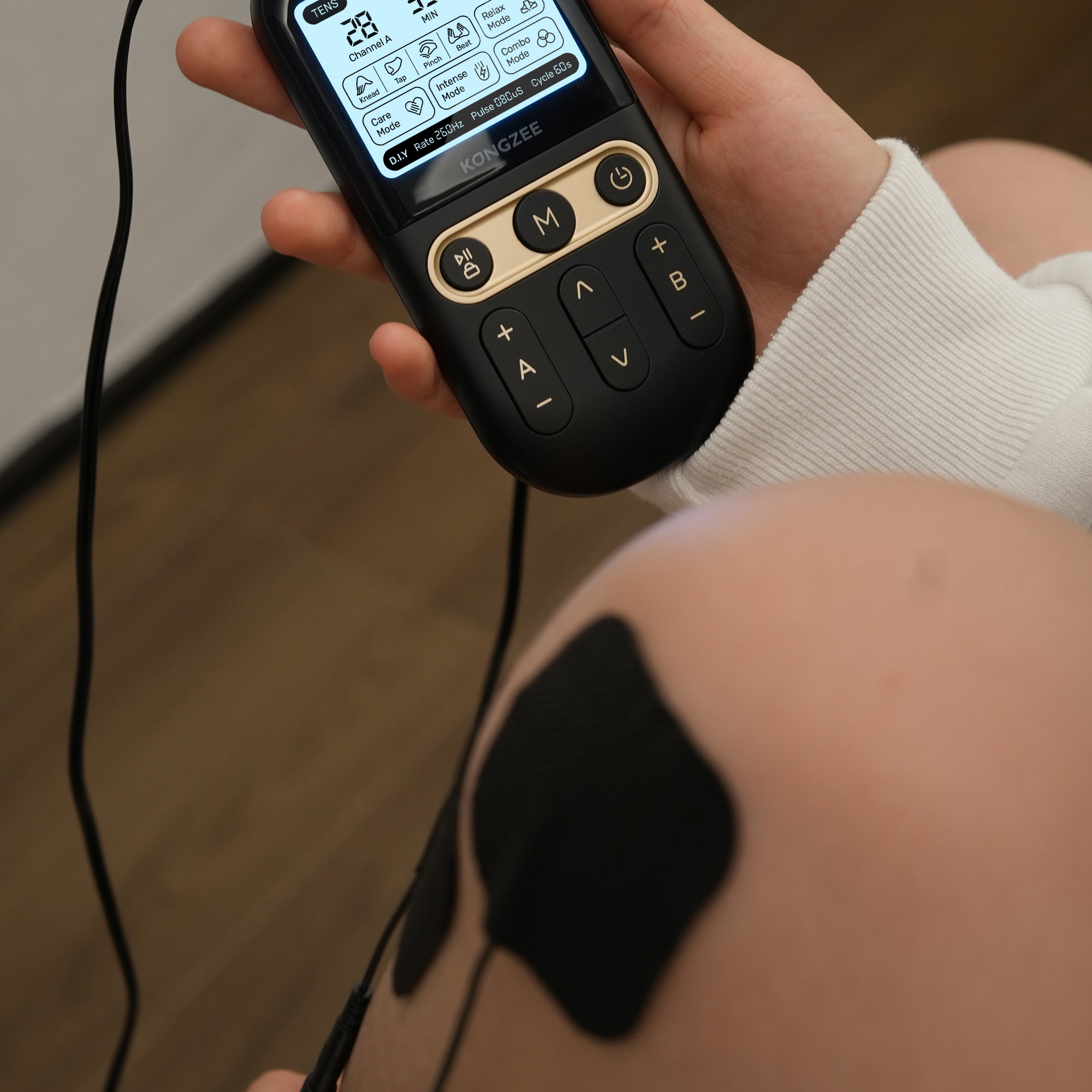
Yes. A combination device can provide separate TENS and EMS programs. The KONGZEE portable rechargeable TENS and EMS unit includes both modes, independent A/B channel intensity and customizable settings. Select the program that matches the intended goal and follow the supplied manual.
Dual-channel output means the intensity of channel A and channel B can be adjusted separately. It does not mean that every mode, body area or simultaneous placement is appropriate. Do not direct current across the chest.
TENS vs EMS for Back Pain
TENS may be considered for temporary sensory stimulation as part of a broader pain-management plan. EMS may be used for muscle activation in a professionally designed rehabilitation program. Neither mode should be used to self-diagnose back pain, and symptoms such as progressive weakness, numbness, fever, trauma or changes in bladder or bowel control require medical assessment.
TENS vs EMS for Workout Recovery
EMS can produce muscle contractions, but it should not be described as clearing lactic acid, replacing exercise or guaranteeing faster recovery. Evidence and appropriate settings vary by goal and population. TENS is aimed at sensory stimulation rather than muscle strengthening.
Safety for TENS and EMS
- Read the device manual and review the TENS contraindications and safety precautions before use.
- Do not place electrodes on the front or sides of the neck, head, eyes, mouth, broken skin or numb areas.
- Do not arrange electrodes so current passes across the chest.
- Do not use while sleeping, bathing, driving or operating machinery.
- Switch the unit off before applying, moving or removing pads and cables.
- Stop if stimulation is painful, burning or causes significant skin irritation.
- Ask a healthcare professional before use if you are pregnant or have a pacemaker, another implanted electronic device, epilepsy, heart disease, cancer, circulation problems or reduced sensation.
Related KONGZEE Guides
- TENS unit pad placement chart and safety guide
- What does a TENS machine do?
- How to clean and store TENS electrode pads
- Standard 2mm replacement TENS pads
- KONGZEE TENS Unit Manual & Support
- How dual-channel TENS controls work
Frequently Asked Questions
Is EMS the same as TENS?
No. TENS is generally used for sensory nerve stimulation, while EMS or NMES is intended to produce muscle contractions through motor-nerve stimulation.
Does TENS build muscle?
No. TENS is not a muscle-strengthening mode. EMS or NMES produces muscle contractions, but results depend on placement, settings and the broader exercise or rehabilitation plan.
Should a TENS unit make muscles twitch?
Typical TENS use produces tingling without visible contraction. If the muscle is contracting, check the selected program, intensity and manual.
Can TENS and EMS be used at the same time?
Some multi-channel devices technically support different programs, but simultaneous use is not automatically appropriate. Follow the device instructions and professional advice, and never create a current path across the chest.
Which is better, TENS or EMS?
Neither is universally better. TENS and EMS serve different goals. Choose according to the intended use, health history, correct placement and professional guidance.
Who should not use electrical stimulation?
People with certain implanted electronic devices, medical conditions, pregnancy or reduced sensation may need to avoid it or obtain professional clearance. Review the manual and ask a healthcare professional when unsure.
Reviewed July 27, 2026. This article is educational and does not replace medical advice, diagnosis or treatment.




Leave a comment
All comments are moderated before being published.
This site is protected by hCaptcha and the hCaptcha Privacy Policy and Terms of Service apply.