

Short answer: Some athletes use TENS as an optional, non-drug form of sensory stimulation when managing discomfort. It may temporarily change pain perception for some users, but it does not diagnose the cause of pain, heal an injury, build fitness or guarantee a shorter recovery time.
Where TENS May Fit in an Athlete's Plan
TENS can sit alongside—not replace—appropriate load management, sleep, nutrition, rehabilitation and medical care. A reasonable goal is temporary comfort while resting or following a clinician's plan. An unsafe goal is numbing warning pain so you can continue an activity that is causing damage.
What the Evidence Can and Cannot Tell Us
TENS research is mixed and varies by condition, settings and study quality. A Cochrane overview of TENS for chronic pain found that available evidence was too low in quality to confidently state effectiveness. It also found insufficient reliable evidence that particular settings or electrode placements consistently change outcomes.
That does not mean no individual ever feels relief. It means claims that frame TENS as routine elite-sport care, promise less soreness or promise shorter recovery go beyond what the evidence can reliably support.
Safe TENS Use for Athletes
- Assess the symptom first. Do not use TENS over a suspected fracture, severe swelling, a new neurologic symptom or unexplained pain.
- Use the unit only while resting and able to monitor it—not while running, lifting, cycling, driving, sleeping or using water.
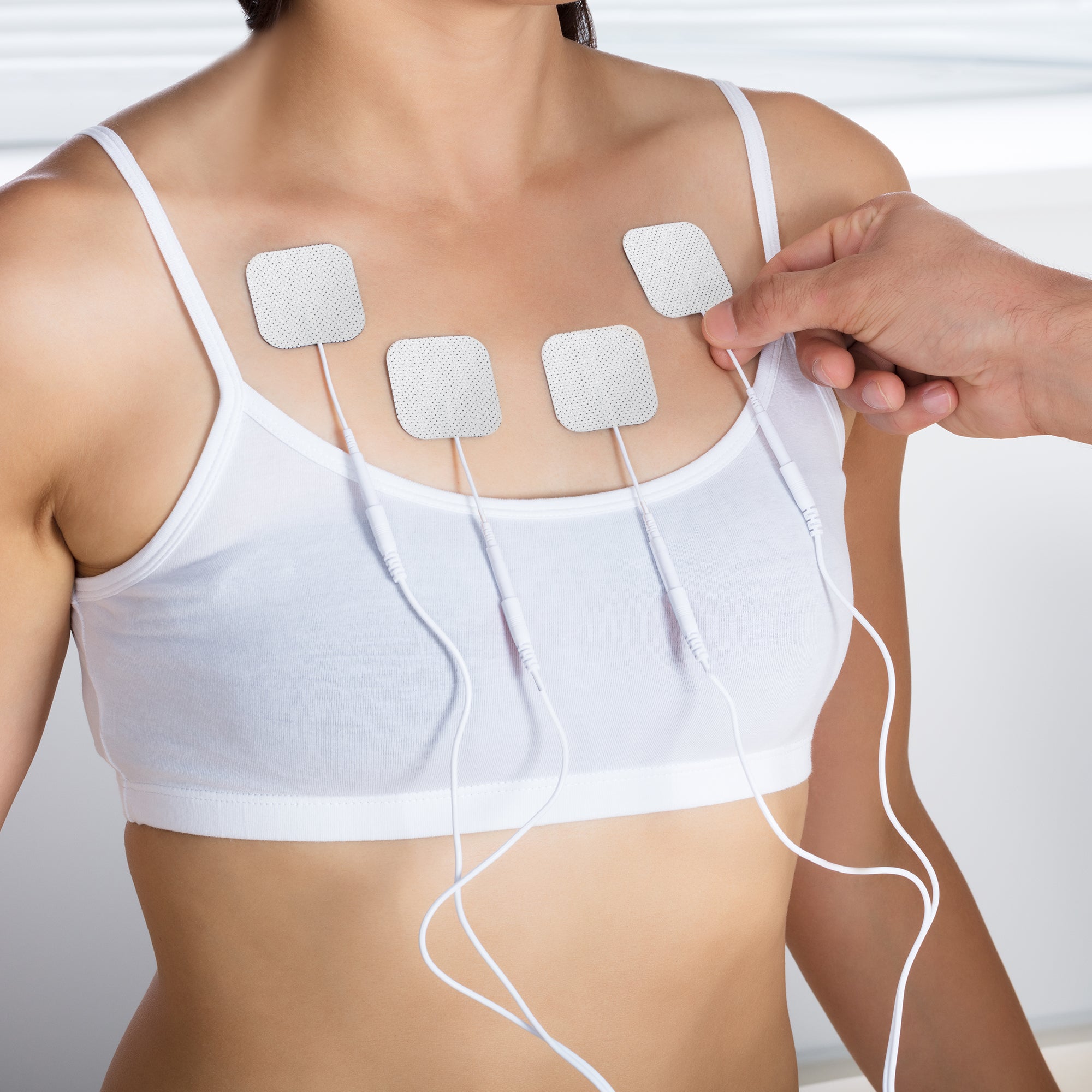
- Apply pads to clean, dry, intact skin with the unit switched off.
- Keep electrodes separated and follow the manual. Never place them so current crosses the chest, or on the head, front or sides of the neck, broken skin or areas with reduced sensation.
- Start at the lowest intensity and increase gradually to a strong but comfortable sensation, never pain.
- Switch the unit off before moving pads and check the skin after use.
See our step-by-step TENS guide, pad placement guide and contraindications guide.
TENS Is Not EMS
TENS mainly targets sensory nerves and usually feels like tingling. EMS targets motor nerves and causes muscle contractions. A combination device may include both, but the modes have different purposes and safety considerations. Read TENS vs EMS before switching programs.
When Pain Needs Assessment
- Pain began with a fall, collision, pop or sudden loss of function.
- You cannot bear weight or use the joint normally.
- There is marked swelling, deformity, weakness or spreading numbness.
- Pain is getting worse, repeatedly changes your technique or returns whenever training resumes.
- You have chest pain, fainting, shortness of breath or another urgent symptom.
Stopping training and identifying the problem is more important than temporarily changing the sensation.
Choosing a TENS Unit for Training and Travel
Look for clear controls, readable safety instructions, compatible replacement pads, portable charging and enough channels for the intended area. More programs or higher intensity do not make a device more clinically effective.
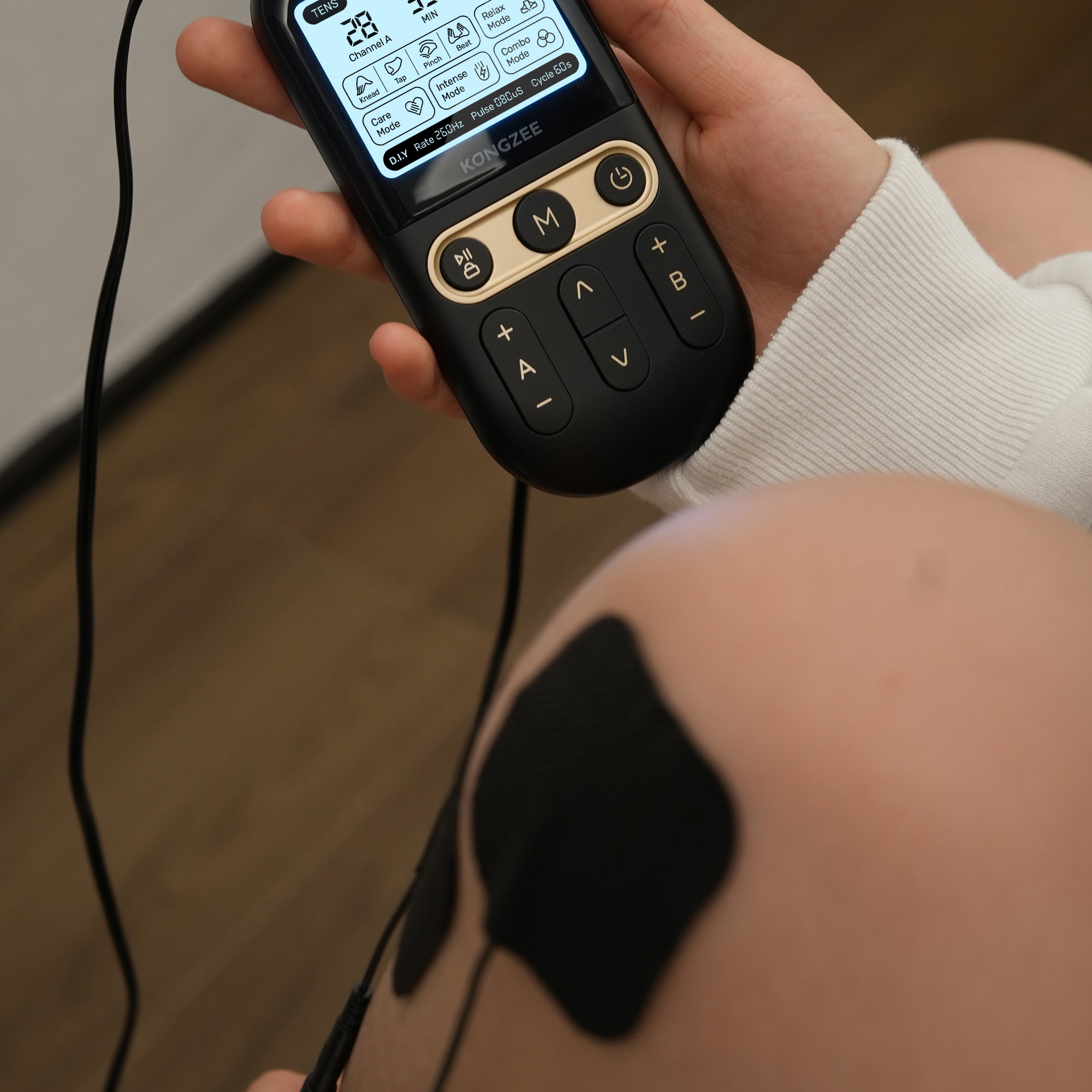
The KONGZEE 4-in-1 TENS & EMS unit offers TENS, EMS, massage and DIY modes, independent dual-channel output, 40 intensity levels and a rechargeable battery. Those are device features—not promises of pain relief, healing or athletic performance.
Frequently Asked Questions
Can I train while wearing a TENS unit?
No. Movement can loosen pads and distract from warning sensations. Use the device only while resting and able to monitor the skin and stimulation.
Does TENS speed muscle recovery?
Current evidence does not support presenting TENS as a guaranteed recovery accelerator. Some users may experience temporary symptom relief, which is different from faster tissue repair.
Can I use TENS every day?
Frequency depends on the device, skin response, symptom and professional advice. Do not assume daily or repeated use is appropriate simply because the stimulation feels comfortable.
Can I use TENS over delayed-onset muscle soreness?
Only after you are reasonably confident the discomfort is ordinary soreness rather than injury, and only according to the manual. Stop if symptoms worsen or stimulation is painful.
Reviewed July 29, 2026. Educational information only; not a diagnosis or individualized sports-medicine plan.



Leave a comment
All comments are moderated before being published.
This site is protected by hCaptcha and the hCaptcha Privacy Policy and Terms of Service apply.